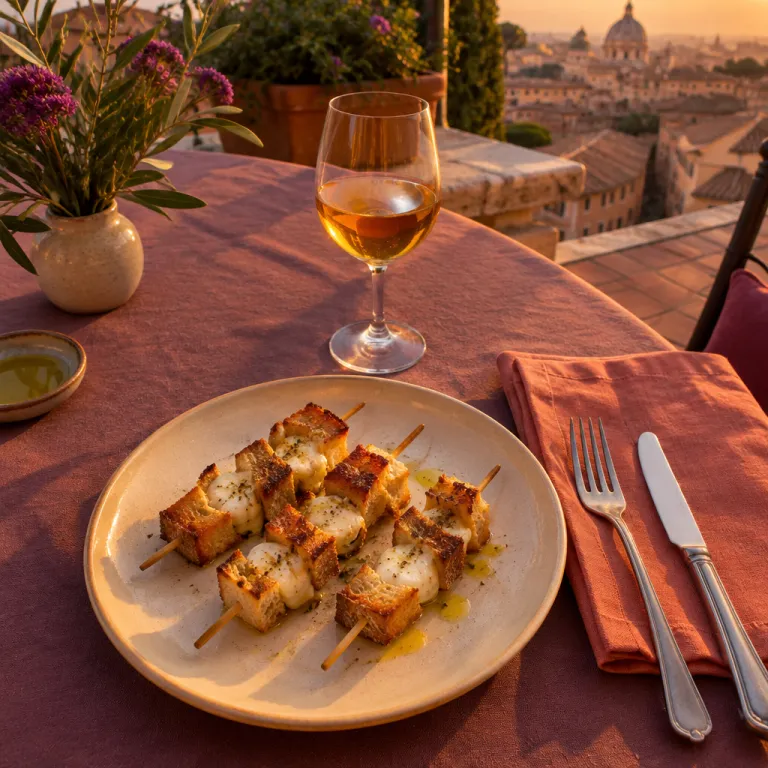
Why spiedini alla romana matters when choosing a Roman hotel
In Rome, the way a hotel prepares spiedini alla romana quietly signals its culinary ambition. This classic Italian antipasto of layered bread and melting mozzarella cheese, finished with a warm anchovy and capers sauce, has become a benchmark for serious hotel kitchens. When a property treats every loaf of bread, every drizzle of olive oil, and every skewer of spiedini with care, you can usually trust the rest of the menu.
Spiedini alla romana began as a rustic dish in the Lazio region, where shepherds relied on sturdy slices of bread and simple dairy to create comforting meals. Today, many Roman hotels reinterpret those bread–anchovy traditions, stacking precise slices of mozzarella between compact squares of day‑old loaf, then baking until the edges turn golden brown and fragrant. The best versions arrive at your table still sizzling after only a few minutes in the oven, the butter and olive oil based sauce pooling invitingly beneath each spiedini.
For travelers, this single dish becomes a practical way to understand the hotel’s wider food philosophy without committing to a long tasting menu. Order a glass or cup of wine and a plate of spiedini alla romana at the bar, then take your time to observe how staff handle the hot dish and how confidently guests explore the menu. If people around you keep returning to the same alla romana specialty, recommending the spiedini to other users and re‑ordering it over time, you have probably found a kitchen that understands both tradition and modern service.
From lobby bar to rooftop: where hotels serve spiedini alla romana
Roman hotels now present spiedini alla romana far beyond the formal restaurant, turning it into a flexible dish for every moment of the day. You might taste a refined version as a welcome bite in the lobby, then later encounter generous spiedini on a rooftop terrace, paired with a cup of Frascati while the city glows below. This versatility makes it ideal for guests who want something more characterful than generic bar snacks yet lighter than a full multi‑course dinner.
In several central properties, chefs prepare compact spiedini skewers for aperitivo, using rustic loaf bread cut into neat slices and brushed with garlic‑infused olive oil. The mozzarella cheese is carefully blotted to control moisture, so it melts slowly and evenly while the bread turns golden brown without becoming greasy, and the anchovy butter sauce is poured at the last possible moment to keep the crust crisp. If you follow a gluten‑free diet, look for hotels that highlight alternative bread options on their menus and in their digital guides, often alongside curated lists of elegant gluten‑free restaurants in Rome for meals outside the property.
Pool bars and casual terraces sometimes offer a lighter alla romana interpretation, replacing part of the butter with extra virgin olive oil and finishing the dish with fresh parsley and a sprinkle of parmesan cheese. Here, spiedini alla romana becomes a relaxed poolside snack, easy to share in small slices while you browse room‑service options on a touch device. Watch how staff guide guests through those systems, helping users explore choices quickly and clearly, because that same attention to detail usually extends to how carefully they time the spiedini in the oven.
How chefs reinterpret spiedini alla romana for modern Roman palates
Across Rome, hotel chefs are quietly competing to refine spiedini alla romana without losing its soul. Some stay close to the traditional alla romana method, stacking bread, mozzarella, and more bread into compact towers before skewering and baking them, then finishing with a classic anchovy, garlic, capers, and butter sauce. Others introduce subtle twists, such as adding white wine to the sauce or using smoke from a grill instead of an oven to give the dish a deeper aroma.
Texture is where the most thoughtful innovation happens, and it is something you can assess in a single bite of spiedini alla romana. The bread should be firm enough to hold its shape yet soft at the center, with the outer slices of bread toasted to a uniform golden brown while the mozzarella cheese inside stretches luxuriously. To achieve this, many chefs use slightly dry loaf bread, bake at high heat for around ten minutes, and then pour the hot sauce only at serving time so the olive oil and butter mixture soaks in without turning the dish soggy.
Seasonal menus also influence how hotels present this Italian classic, especially in autumn when rich flavors dominate Roman tables. You may see spiedini alla romana paired with truffle shavings or served alongside porcini dishes, echoing the city’s broader seasonal food culture highlighted in guides on how to eat Rome in autumn. When chefs balance the anchovy and capers intensity with delicate herbs like parsley and a restrained amount of parmesan cheese, the result is a dish that feels both deeply romana and perfectly suited to contemporary hotel dining.
Digital menus, touch devices, and how guests choose spiedini alla romana
As Roman hotels adopt digital menus, the way guests encounter spiedini alla romana is changing almost as quickly as the recipes themselves. Many properties now use tablets or in‑room televisions as a primary touch device, allowing device users to scroll through photos of each dish before ordering. When these systems are designed well, they help users explore the nuances of spiedini alla romana, from the type of bread and cheese used to the exact composition of the anchovy and capers sauce.
Look for interfaces where you can select touch options intuitively, using gentle swipe gestures to move between antipasti, primi, and secondi. Clear arrows review icons, responsive autocomplete arrows in the search bar, and a simple review enter step at checkout all reduce friction, leaving more time to enjoy your mozzarella‑filled spiedini alla romana while it is still hot. Hotels that invest in this kind of thoughtful digital design usually apply the same precision to timing the dish in the oven, ensuring the bread turns golden brown in just the right number of minutes.
Digital platforms also allow chefs to explain their alla romana philosophy in more depth, which matters if you care about ingredients. Some menus detail whether the olive oil is local, how the loaf bread is sourced, and whether the butter sauce includes extra herbs like parsley or a touch of lemon to brighten the anchovy flavor. When you see this level of transparency about every slice of bread anchovy preparation, you can be confident that the kitchen respects both tradition and the expectations of modern travelers.
Wellness, spa culture, and lighter takes on spiedini alla romana
The rise of wellness‑focused hotels in Rome has not pushed spiedini alla romana off the menu; it has simply encouraged lighter, more balanced versions. In spa properties where guests move between thermal pools and massage rooms, chefs often reduce the butter in the sauce and rely more on fragrant olive oil to keep the dish satisfying yet less heavy. Portions may be smaller, with two or three compact spiedini per person, allowing you to enjoy the flavors of mozzarella, anchovy, and capers without overwhelming a carefully planned spa day.
Some of the city’s new spa hotels, including those highlighted in guides to Rome’s contemporary bathhouse‑style retreats, serve spiedini alla romana in serene lounges rather than noisy bars. Here, the dish often arrives on minimalist plates, each loaf‑based stack cut into precise slices and finished with a measured cup of sauce, then garnished with a few leaves of parsley for color. The timing is meticulous, with staff coordinating kitchen and spa schedules so your spiedini reaches the table within minutes of leaving the oven, just as you return from a treatment.
Health‑conscious guests also appreciate when hotels explain the composition of the alla romana sauce in detail, including the ratio of butter to olive oil and the amount of salt contributed by anchovy and capers. This transparency allows you to adjust your order, perhaps requesting less sauce or extra slices of bread to balance the intensity, while still enjoying an authentically romana experience. When a property is willing to adapt such a traditional Italian dish thoughtfully, it usually signals a broader commitment to personalized hospitality.
How to evaluate a hotel’s food philosophy through spiedini alla romana
When you sit down in a Roman hotel bar or restaurant, ordering spiedini alla romana can be a revealing first test of the kitchen. Pay attention to how the staff describe the dish, whether they mention the type of loaf used, the origin of the mozzarella cheese, or the balance of butter and olive oil in the sauce. A confident, detailed explanation suggests that the team understands why this simple‑looking plate matters so much in local food culture.
When your spiedini alla romana arrives, examine the structure before taking a bite, because visual cues tell you a lot about technique. The slices of bread should be evenly cut, with clean edges where the skewer passes through, and the surface should be uniformly golden brown rather than patchy, indicating that the kitchen controlled both temperature and time. If the mozzarella melts into soft layers without leaking excessively and the anchovy and capers sauce pools gently around the base instead of drowning the dish, you are likely in capable hands.
Finally, consider how the experience fits into the hotel’s overall service ecosystem, from printed menus to touch device ordering. Do users explore the menu easily, using swipe gestures and arrows review prompts to move between courses, or do they struggle with clumsy select touch steps and confusing autocomplete arrows in the search bar? A property that refines every detail, from the timing in minutes of your alla romana spiedini to the clarity of the review enter confirmation screen, is usually one that will reward a longer stay and more ambitious dining plans.
Key figures and practical statistics about spiedini alla romana in hotels
- Typical bake time for spiedini alla romana is around 10 minutes at high heat, which allows the bread to become golden brown while the mozzarella melts without drying out, according to widely cited Italian home‑cooking guides and professional recipe collections such as La Cucina Romana (Newton Compton) and the Gambero Rosso recipe archive.
- Many hotel chefs in Rome use bread slices cut to about 1.25 centimetres thickness, a measure recommended in several Italian cookbooks, including Il Cucchiaio d’Argento, because it helps the loaf structure stay firm around the melted cheese while still absorbing the anchovy and butter sauce effectively.
- Oven temperatures for traditional alla romana preparations often reach about 230 °C, a level mentioned in numerous published recipes from sources like La Cucina Italiana and regional Lazio cookbooks that emphasize precise timing so the olive oil and butter do not burn before the spiedini are fully heated through.
- In Roman antipasto menus, spiedini alla romana typically appears in portions of two to four skewers per person, a serving size reflected on many hotel bar and rooftop lounge menus reported in Italian hospitality trade magazines such as Ristorazione Italiana, which note that this format makes the dish easy to share without replacing a full main course.
- Surveys of Italian hotel and restaurant menus published in trade magazines like Ristoranti and Italia a Tavola consistently show that mozzarella‑based antipasti, including variations of spiedini alla romana, remain among the most frequently ordered hot starters, reflecting sustained guest interest in traditional yet approachable dishes.
FAQ about spiedini alla romana in Roman hotels
Is spiedini alla romana usually fried or baked in hotels?
In most Roman hotels, spiedini alla romana is baked or grilled rather than fried, because these methods keep the bread lighter while still achieving a golden brown crust. Some traditional kitchens do fry the bread and mozzarella sandwich briefly before adding the anchovy and capers sauce, but this is less common in wellness‑oriented properties. When in doubt, ask your server how the dish is prepared so you can choose the version that best suits your preferences.
What sauce should I expect on authentic spiedini alla romana?
Authentic spiedini alla romana in hotel restaurants typically comes with a warm sauce made from anchovy, garlic, capers, butter, lemon, and sometimes a splash of white wine. This mixture is poured over the toasted bread and mozzarella just before serving, so the flavors remain vivid and the texture of the bread is preserved. If you prefer a lighter option, some hotels will happily increase the proportion of olive oil or reduce the amount of butter on request.
Can hotels use different cheeses instead of mozzarella?
Fresh mozzarella is the traditional choice for spiedini alla romana, but some Roman hotels use closely related pasta filata cheeses such as provatura when they want a slightly firmer texture. These alternatives still melt beautifully between the slices of bread, creating the characteristic stretch that guests expect from the dish. If you are curious, ask the staff which cheese they use and whether they can adapt the recipe to accommodate your dietary needs.
How can I tell if a hotel takes spiedini alla romana seriously?
You can usually judge a hotel’s commitment by the details of the dish, from the quality of the loaf bread to the balance of anchovy and capers in the sauce. Well‑executed spiedini alla romana will arrive hot, with evenly toasted bread, fully melted mozzarella, and a fragrant mix of butter and olive oil that does not overwhelm the plate. Staff who can explain the preparation clearly and adjust timing or portion size for you show that the kitchen treats this romana classic as more than a token menu item.
Is spiedini alla romana suitable for sharing at the hotel bar?
Spiedini alla romana is ideal for sharing, especially in hotel bars and rooftop lounges where guests often want a substantial snack rather than a full meal. The dish is usually served as several individual spiedini, each made from stacked slices of bread and cheese, so it is easy to divide among friends. Pair it with a cup of local wine or a light cocktail, and you have a relaxed yet distinctly Italian way to begin your evening in Rome.